Windows do way more than just look cute. They protect your home, help control energy use, and keep everything comfy. When you understand the basics of window anatomy, it gets a lot easier to spot issues, plan a replacement window, and choose upgrades that make your home feel better day to day. A clear window parts diagram gives you a simple view of how everything fits together, no matter what style you have. It also helps you understand window parts names, how things open and close, and what to check when something feels off.
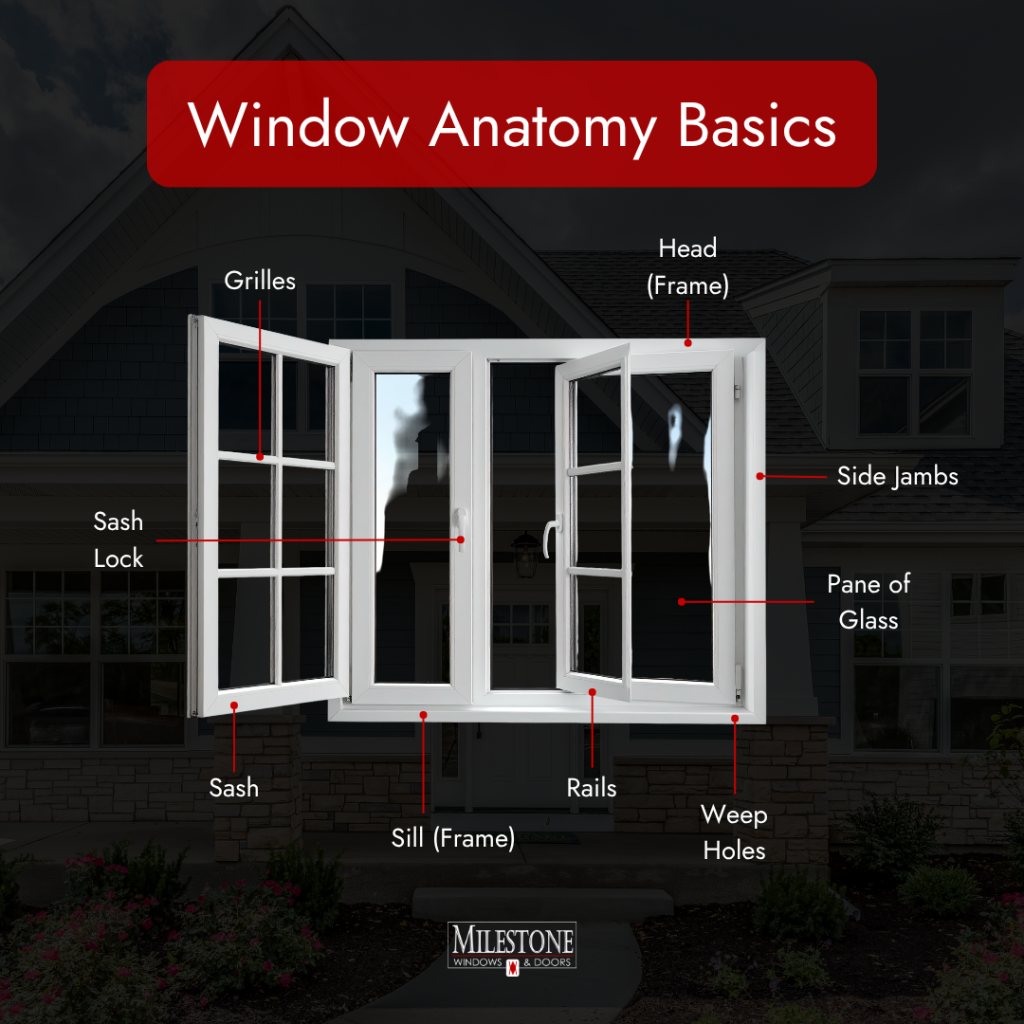
Key Window Parts at a Glance
| Part Name | Function | Location | Notes / Components |
| Frame | Holds the window together and supports all parts | Exterior & Interior | Includes head, sill, and side jambs |
| Sash | Supports the pane of glass and allows movement in some windows | Interior | Can include top sash and bottom sash in sliding or sash windows; contains window sash components like rails |
| Pane of Glass | Lets in light and provides insulation | Interior | Single, double, or triple paned with optional argon gas |
| Sill | Bottom part that sheds water and protects against damage | Exterior | Part of a window frame diagram, essential for water drainage |
| Side Jambs | Vertical sides that support the sash and allow movement | Exterior & Interior | Can include tracks or guides for sliding windows |
| Top & Bottom Rails | Horizontal parts of the sash that hold the glass | Interior | Helps windows open and close smoothly; keeps sash aligned |
| Sash Lock | Secures movable parts | Interior | Keeps windows safe and tight; check regularly |
| Weep Holes | Drain water from frame | Exterior | Common in vinyl windows to prevent moisture buildup |
| Window Opening | The space the sash moves within | Interior & Exterior | Helps define size for replacement window |
How Window Parts Differ Across Styles and Materials
While all windows share the same core parts, frame, sash, glass, sill, and side jambs, differences in material and style affect how they function, what maintenance they need, and which upgrades make the biggest impact. Knowing these variations helps you care for your windows and make smarter choices.
By Material
- Aluminum Windows: Lightweight and durable. They resist warping but check seals for air or water leaks periodically.
- Vinyl Windows: Energy-efficient and low maintenance. Keep weep holes clear and ensure the sash slides smoothly.
- Wood Clad Windows: Classic and attractive, but watch for moisture at the sill and make sure rails stay aligned to avoid sticking.
By Type
- Awning Windows: Hinged at the top. Lubricate the crank and hinges to keep them opening easily.
- Bay & Bow Windows: Multiple connected windows. Inspect corner seals to prevent drafts or water leaks.
- Casement Windows: Swing open like a door. Focus on cranks, hinges, and proper alignment.
- Custom Windows: Unique shapes or sizes. Check hardware and fit carefully.
- Double Hung Windows: Both sashes move up and down. Inspect cords, weights, and locks for smooth operation.
- Horizontal Sliding Windows: Glide along top or bottom tracks. Clean tracks and lubricate rollers to prevent sticking.
- Impact-Resistant Windows: Built to handle storms. Check seals and glazing regularly for cracks.
- Picture Windows: Fixed panes with no moving parts. Inspect seals to prevent leaks.
- Single Hung Windows: Only the bottom sash moves. Ensure it slides smoothly and locks securely.
No matter the material or type, the core anatomy stays the same, so knowing the universal parts makes it easier to maintain, repair, or upgrade any window in your home.
Tips for Window Care
Keeping your windows in good shape doesn’t have to be stressful. A few daily or seasonal checks can save you money in the long run.
- Check the sash lock: If the sash doesn’t close all the way or rattles in the frame, the lock might be loose or worn out.
- Keep tracks and rails clean: Sliding windows and sliding glass doors rely on smooth tracks. Dirt on the bottom rails can make the sash stick.
- Look for fogging or cracks: Fog between panes usually means the seal is broken. A replacement window might be needed.
- Check the frame: Warped frames make it hard for windows to open and close. This usually shows up on the sides of the window where the side jambs are.
- Use triple-pane windows if you want better insulation: Some homeowners love the upgrade because the argon gas helps block heat and noise.
- Check weep holes on vinyl windows: If they clog, water builds up in the frame.
Window Parts Questions
How do I identify which part of my window needs repair?
Look for signs like water leaks at the sill, difficulty opening or closing the sash, condensation between glass panes, or rattling locks. Each symptom points to a specific component; sash issues, damaged seals, or frame problems.
Why do some windows have weep holes?
Weep holes help prevent water from collecting inside the frame, which can cause rot or mold. Checking them regularly keeps the window performing as designed.
What’s the difference between single, double, and triple-pane glass?
Each pane adds insulation and soundproofing. Double and triple-pane windows often include argon or krypton gas between layers, boosting energy efficiency and reducing outside noise.
Can I upgrade parts instead of replacing the whole window?
Sometimes yes. Sash locks, weatherstripping, or rails can be replaced or repaired to improve function. Glass panes or sash components may also be upgraded for better insulation without swapping the full frame.
How do tracks and rails affect window performance?
Sliding and sash windows rely on clean, aligned tracks to glide smoothly. Dirt or warping here can make opening difficult and wear out moving parts faster.
Window Parts Diagram Recap
A window parts diagram helps you see every part of your windows, from the frame and sash to the pane of glass and side jambs. Knowing these components makes it easier to spot issues early, maintain comfort, and protect your home from drafts or water damage. It also helps you make smarter choices when upgrading to energy-efficient windows or triple-pane glass.
As window experts in Rosenberg, TX, we help homeowners understand their window components and choose solutions that fit their home’s style and efficiency needs. Whether it’s checking seals, repairing sash components, or guiding upgrades, we make it simple to keep your wood clad or vinyl windows working like new.
Thinking about refreshing your windows? Request a free consultation today to explore window diagrams, parts guidance, and solutions that improve comfort and energy efficiency throughout your Houston home.